Table of Contents
Stay calm and act quickly when childhood emergencies happen. Your complete first aid reference for the most common situations.
All Ages
Jordan Myers
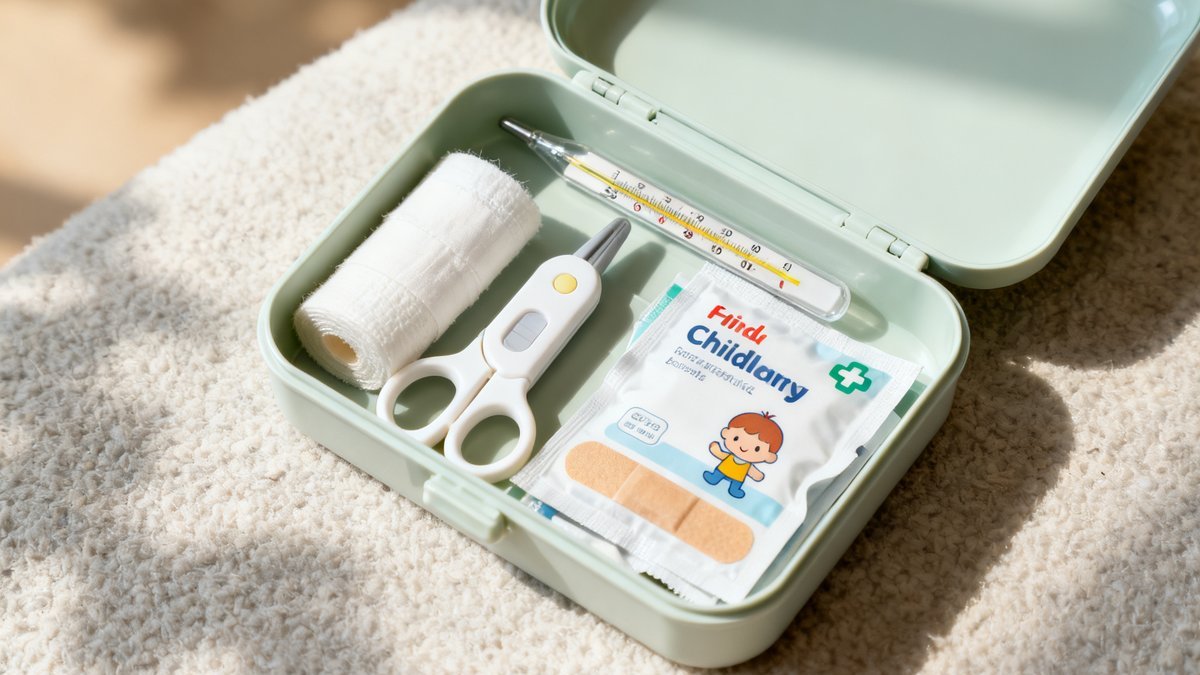
Stay calm and act quickly when childhood emergencies happen. Your complete first aid reference for the most common situations.
Choking is a leading cause of injury in young children, particularly those under age 4 who explore the world by putting objects in their mouths. For an infant under 1 year who is choking and cannot cough, cry, or breathe, hold the baby face-down along your forearm with the head lower than the chest and deliver 5 back blows between the shoulder blades. If the object does not dislodge, turn the baby face-up and give 5 chest thrusts using two fingers on the lower half of the breastbone.
For children over 1 year, the Heimlich maneuver is the appropriate response. Stand behind the child, make a fist with one hand just above the navel, grasp it with the other hand, and deliver quick inward and upward thrusts. If the child becomes unconscious, lower them to the ground and begin CPR, checking the mouth for the dislodged object after each set of compressions and breaths.
If your child stops breathing and is unresponsive, begin CPR immediately. For infants, give 30 chest compressions with two fingers placed just below the nipple line, pressing about 1.5 inches deep, followed by 2 gentle rescue breaths covering the baby's mouth and nose. For children, use one or two hands for compressions and pinch the nose while giving rescue breaths. Continue until emergency services arrive or the child starts breathing on their own.
"The difference between a parent who freezes and a parent who acts in an emergency is preparation. Taking a CPR class is not just education. It is muscle memory that activates when panic tries to take over."
For minor burns, immediately cool the burned area under cool running water for at least 10 minutes. Do not apply ice, butter, toothpaste, or any home remedy, as these can worsen the burn. Cover the burn loosely with a sterile, non-stick dressing. For burns larger than 3 inches, burns on the face, hands, feet, or genitals, or burns that appear charred or leathery, seek emergency medical care immediately.
Falls are the most common childhood injury, and head injuries require special attention. After a fall, check for loss of consciousness, confusion, vomiting, unusual drowsiness, slurred speech, or unequal pupil size. If any of these symptoms are present, seek emergency care. For minor bumps, apply a cold compress for 15 to 20 minutes and monitor your child for the next 24 hours. Wake them every few hours during the first night to check responsiveness.
If you suspect your child has swallowed something poisonous, call Poison Control immediately at 1-800-222-1222. Do not induce vomiting unless instructed by a medical professional. Have the substance container available to provide information about the ingredients. Keep syrup of ipecac in your first aid kit but only use it if Poison Control specifically instructs you to do so.
Allergic reactions can range from mild hives to life-threatening anaphylaxis. If your child has a known severe allergy, always carry two epinephrine auto-injectors. Signs of anaphylaxis include difficulty breathing, swelling of the tongue or throat, severe hives, vomiting, and dizziness. Administer epinephrine immediately if anaphylaxis is suspected and call 911. Do not wait to see if symptoms improve -- epinephrine is safe and delaying it can be fatal.
General parenting advice: review and restock your first aid kit every six months. Check expiration dates on medications and replace used items. Keep a first aid reference card in your kit with emergency phone numbers and quick-response instructions for common emergencies. Having information readily available in a crisis reduces panic and improves outcomes.
Knowing how to respond to common childhood emergencies gives you the confidence to stay calm and act effectively when accidents happen. Take a certified first aid and CPR course, keep your first aid kit well-stocked, and keep emergency numbers readily accessible. Preparation does not prevent all accidents, but it ensures you are ready to handle them with competence instead of panic.
"First aid knowledge is like insurance. You hope you never need it, but when you do, you need it to work perfectly and immediately."
"A prepared parent is not one who prevents every accident. It is one who responds to accidents with calm competence instead of panicked helplessness."